Food & hospitality marketing is the planning and running of communication for restaurants, cafés, dark kitchens, caterers, delivery brands and restaurant chains so that it translates into reservations, orders and regulars.
Customers pick a place before they get there. In this industry, photos on Google Maps, Instagram Reels and ratings in delivery apps are what count. We’re a creative agency based in Wrocław and Warsaw. We start with strategy and branding, then shoot mouth-watering photos and videos and run your social media. We launch Meta Ads and Google Ads campaigns and build websites with menus and online ordering. We measure results in orders, not likes.
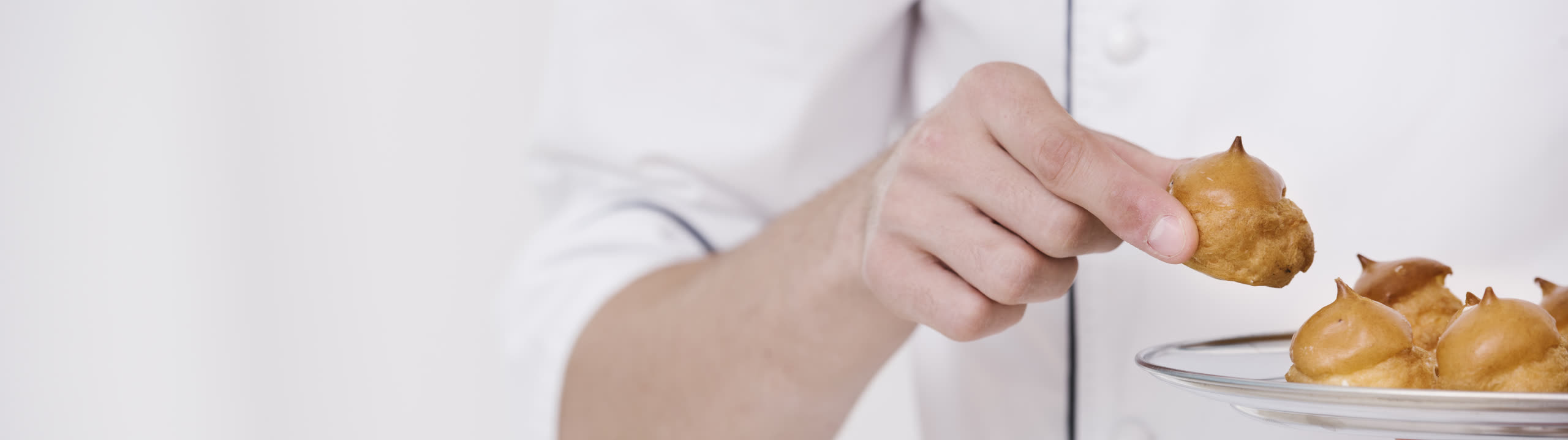
Kucharz w białej bluzie podający ptysie z talerza
MARKET & CHALLENGES

What you’re up against in food service

A restaurant fights for guests with the place across the street. A diet meal delivery company competes with dozens of others offering much the same. Guests decide fast, usually before they reach the door. Whether they come back depends on what happens after the first visit or delivery.

Everyone sounds the same

Fresh ingredients, home-style cooking, fast delivery. When every restaurant and caterer promises the same thing, guests choose on price.

Discount wars

Every new discount code eats into your margin, and some customers now only order with a discount. If price is all that sets your brand apart, anyone cheaper will overtake you.

Platform dependence

Delivery apps give you reach, but they take a commission on orders and don’t share full customer data with you. Without that data, it’s hard to build your own customer list.

Guests don’t return

The first order is only the beginning. Without follow-up after the visit and a reason to return, next time the guest will pick someone else.

Public ratings

Guests read ratings and look at other guests’ photos before they walk in or order. Unanswered negative reviews are visible to anyone looking for a place nearby.

Opening a new venue

A new restaurant, dark kitchen or catering brand starts with no reviews, no followers and no regulars. The first few weeks will decide its position in the market.
WHAT’S DIFFERENT

How food & hospitality marketing differs

Five ways it differs from marketing in other industries:
01
We eat with our eyes first.
Photos and video sell a dish before the guest reads the menu. Photo quality is part of the product.
02
Reach in kilometers.
A restaurant relies on guests from the neighborhood, while a dark kitchen or caterer relies on its delivery zone. You target your ads at that area.
03
Real-time marketing.
The weather, a big game, the holidays or strawberry season give people a reason to order, if you react in time.
04
Alcohol and health claims.
Alcohol advertising is restricted by the Polish Act on Upbringing in Sobriety and Counteracting Alcoholism, and health claims by EU law.
05
Different occasions, different channels.
Lunch at work, dinner for two, a weekly meal plan: each occasion has its own decision moment and its own channel.
That’s why, before we switch on any campaigns, we polish the photos, menu and key visual, the things guests see first.
COMPLIANCE

How we work in food service advertising

We do
show dishes, the interior, the team and the kitchen behind the scenes
publish menus with prices and allergens (mandatory for online ordering)
advertise delivery, catering and reservations on Google, Meta and TikTok
send newsletters and SMS to people who have opted in
work with creators if the post is labeled as an ad
We avoid
alcohol advertising and promotion outside the venue, including on social media
health claims not on the EU list (“detox,” “cleanses the body”)
promises about the rate and amount of weight loss in diet meal delivery ads
fake or commissioned reviews
This list follows Article 13¹ of the Polish Act on Upbringing in Sobriety and Counteracting Alcoholism, EU Regulations 1169/2011 and 1924/2006, the Polish Electronic Communications Law and the Polish Act on Counteracting Unfair Market Practices. This is not legal advice.
SERVICES

What we do for food & hospitality

Social media and food content

Photos, Reels and real-time posts on Instagram, Facebook and TikTok that make people hungry. Plus collaborations with food creators.
Explore social media

Meta Ads and Google Ads campaigns

Campaigns for delivery, reservations and catering orders, with tracking of purchases and customer acquisition cost.
Explore ad campaigns

Key visual and brand identity

A consistent look across your menu, feed, ads and in-venue materials, so people recognize your brand from the thumbnail alone.
Explore key visuals

Website with menu and ordering

A fast website with an up-to-date menu, allergens, reservations or a catering shop. Guests order without a middleman.
Explore websites & apps

AI for guest service and orders

An AI assistant answers questions about the menu, opening hours and catering, and automations ask guests for a review after their visit or delivery.
Explore automation
SAMPLE PROJECT

Food & hospitality marketing in practice

Case study · Diet meal delivery

Kukuła Healthy Food

Appetite sells, discounts only speed it up
In diet meal delivery, everyone competes on calories, time and price. Kukuła sells restaurant quality at home, so we went with appetizing creatives, video and real-time marketing on social media, plus Meta Ads campaigns. Results for September 2025–February 2026:
~×18
average ROAS in Meta Ads
4,000+
purchases from ads
12M+
ad impressions
Challenge
Full case study
Woman on a red-and-white striped blanket next to a Kukuła Healthy Food box with baked goods and blueberries
FAQ

Common questions about food & hospitality marketing

How do you promote a restaurant online?
The first step is your Google Business Profile, which guests see on Google Maps: up-to-date opening hours, photos, the menu and replies to reviews. The second is a fast website with your menu and reservations. Then mouth-watering photos and Reels on social media build recognition, while Meta Ads and Google Ads campaigns reach people nearby at the times when they’re deciding where to eat. Tag the links in every channel so you know where reservations and orders come from.
What is food & hospitality marketing?
Food & hospitality marketing brings together everything that takes a guest from the first photo of a dish to their next visit or order: strategy and what sets the brand apart, key visual, food photos and video, social media, Meta Ads and Google Ads campaigns, Google Business Profile, a website with a menu and ordering, and review management. It applies to restaurants, cafés, caterers, dark kitchens and chains. It also takes into account the rules on alcohol and food advertising.
How much does restaurant marketing cost?
The cost depends on the number of locations and cities, the channels and the ad budget. You pay once for an audit, strategy, key visual or a new website, and monthly for running social media and campaigns. Ad spend goes directly to Google or Meta. Details matter too: a seasonal menu means a new photo shoot every time the menu changes, and a chain usually needs separate campaigns for each location. We’ll prepare a quote after we talk about your locations and your goals for the coming season.
Can a restaurant advertise alcohol on social media in Poland?
As a rule, no. Article 13¹ of the Polish Act on Upbringing in Sobriety and Counteracting Alcoholism bans the advertising and promotion of alcoholic beverages other than beer, and beer may only be advertised under strict conditions, for example without associating it with relaxation, leisure, or professional or personal success. The ban doesn’t apply to advertising and promotion on the premises of a venue that serves alcohol for consumption on site, but it does apply to a social media post about happy hour drinks. These rules are being amended right now, so check where the law stands before you run a campaign.
How do you get more Google reviews for a restaurant?
Ask every guest for a review, simply and without pressure. On site, use a QR code on the bill or the table. If the guest has agreed to be contacted, also send a message after delivery or catering drop-off. Reply to every review, including critical ones, factually and without arguing, because future guests read them. Don’t publish fake reviews or commission them: Article 7(26) of the Polish Act on Counteracting Unfair Market Practices prohibits this. Google’s policies also prohibit offering rewards for reviews and asking only satisfied guests for them.

See also

Other industries we run marketing for:

Wybierz swoją ulubioną formę kontaktu

Podaj nam swojego maila/nr telefonu a my się odezwiemy
lub umów się na spotkanie bezpośrednio
Done. The ball’s in our court. We’ll get back to you soon.
Something went wrong. Please try again.